Create a Data Provider Command package
A Data Provider Command package runs SQL against one of the workspace's data provider connections. Use it for the database housekeeping that belongs in the nightly flow rather than in a maintenance plan: rebuilding indexes, refreshing a materialised table, calling a stored procedure that stamps a load as complete.
It reuses connections you have already defined, so there is no new credential to manage.
Two modes
The editor works one of two ways, switched by a toggle:
- Stored procedure (the default) — pick a schema, then a procedure, and the editor detects its parameters for you to fill in
- Custom SQL — write the statement yourself
Toggle on to run a custom SQL statement instead of a stored procedure.
Prefer a stored procedure where one exists. The SQL then lives in the database, under source control with the rest of the schema, and the package holds only a call — which means changing the logic does not mean editing a package, and the statement can be tested in isolation.
Reach for custom SQL for one-liners and for anything you would be embarrassed to create a procedure for.
Before you start
A data provider connection in the workspace, pointing at a database the command may write to. The command runs with that connection's credentials, so its permissions are the ceiling on what the package can do.
Steps
1. Create the package
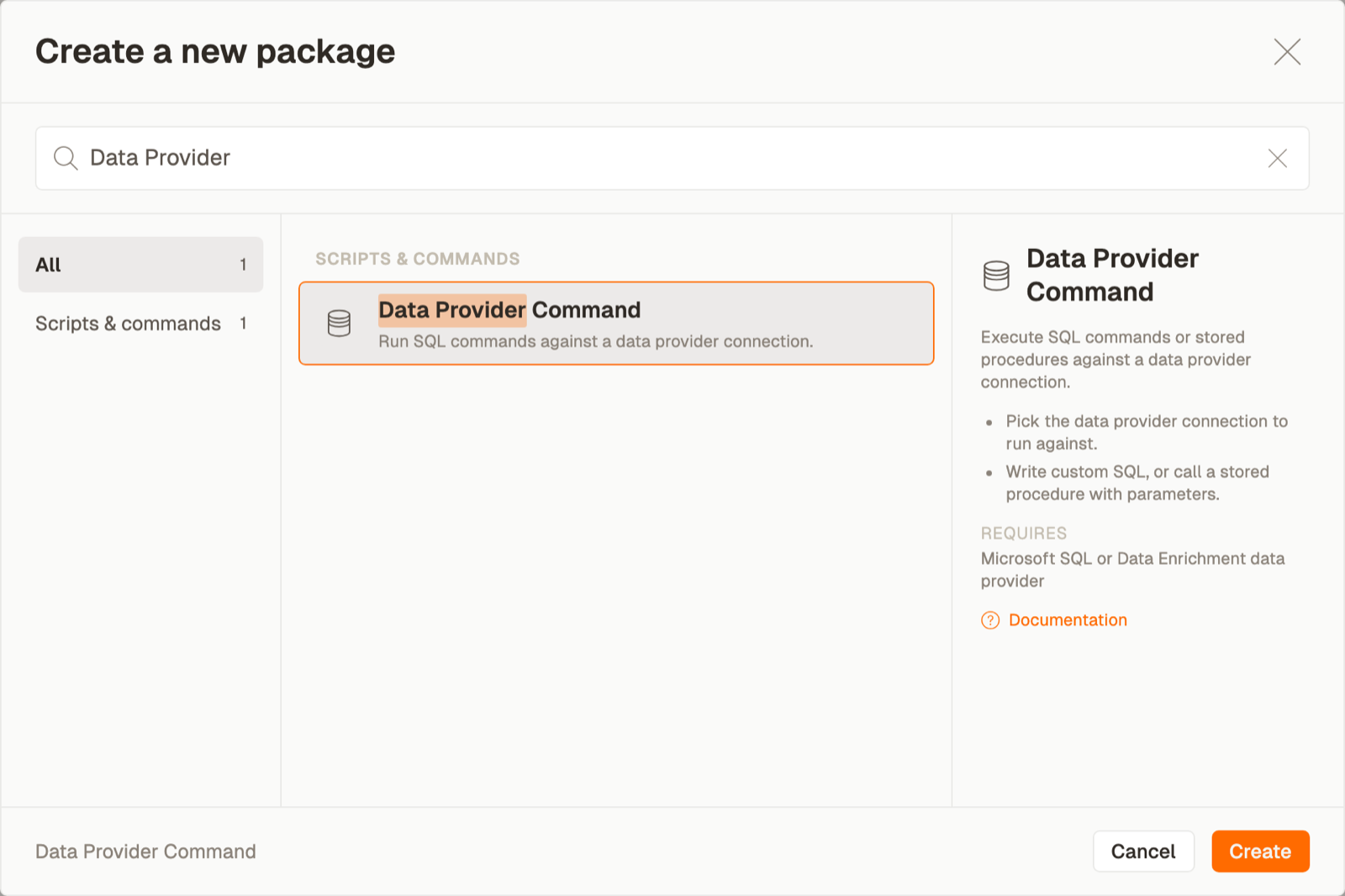
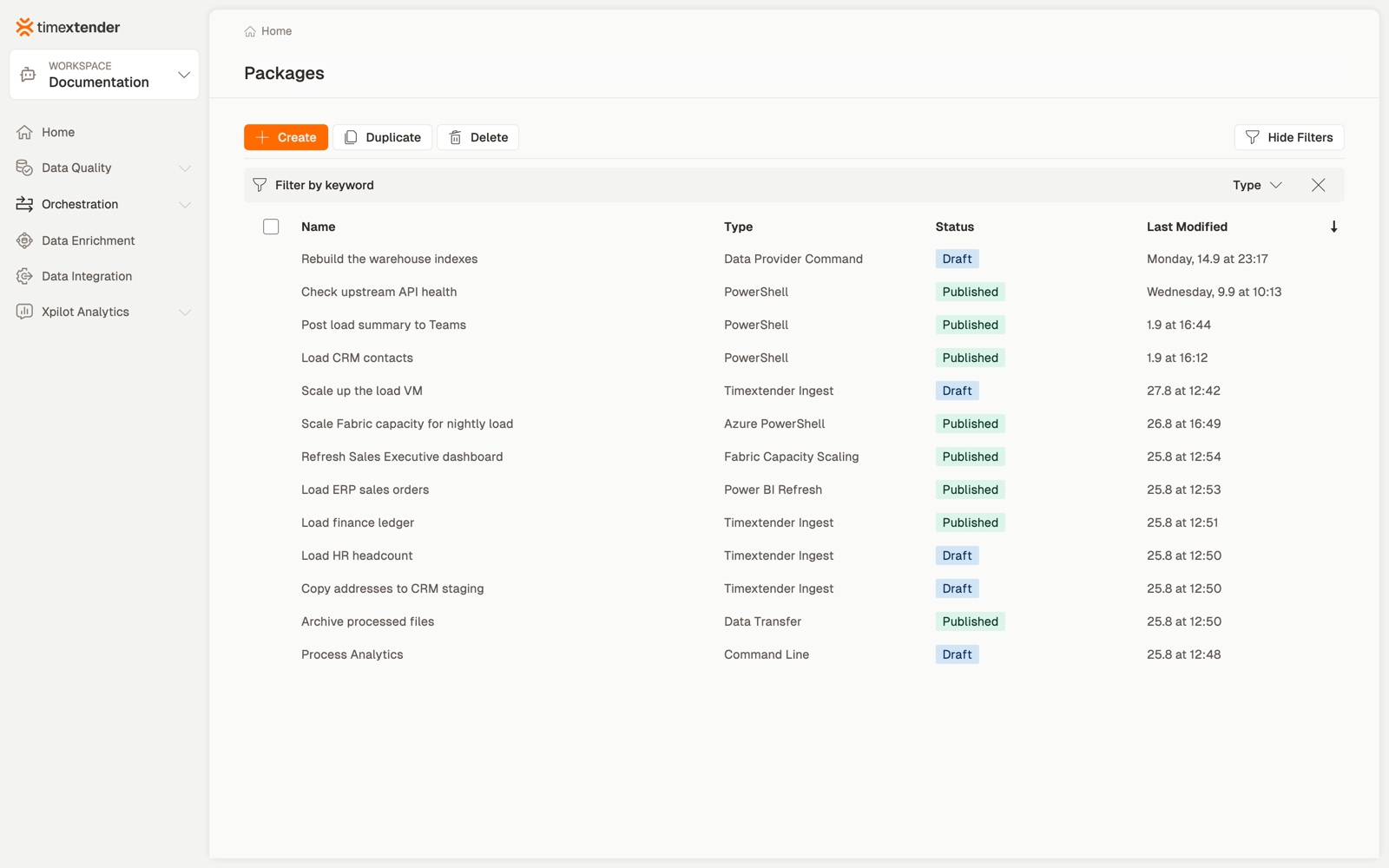
Orchestration → Packages → Create, then Data Provider Command from Scripts & commands.
2. Name it and choose the connection
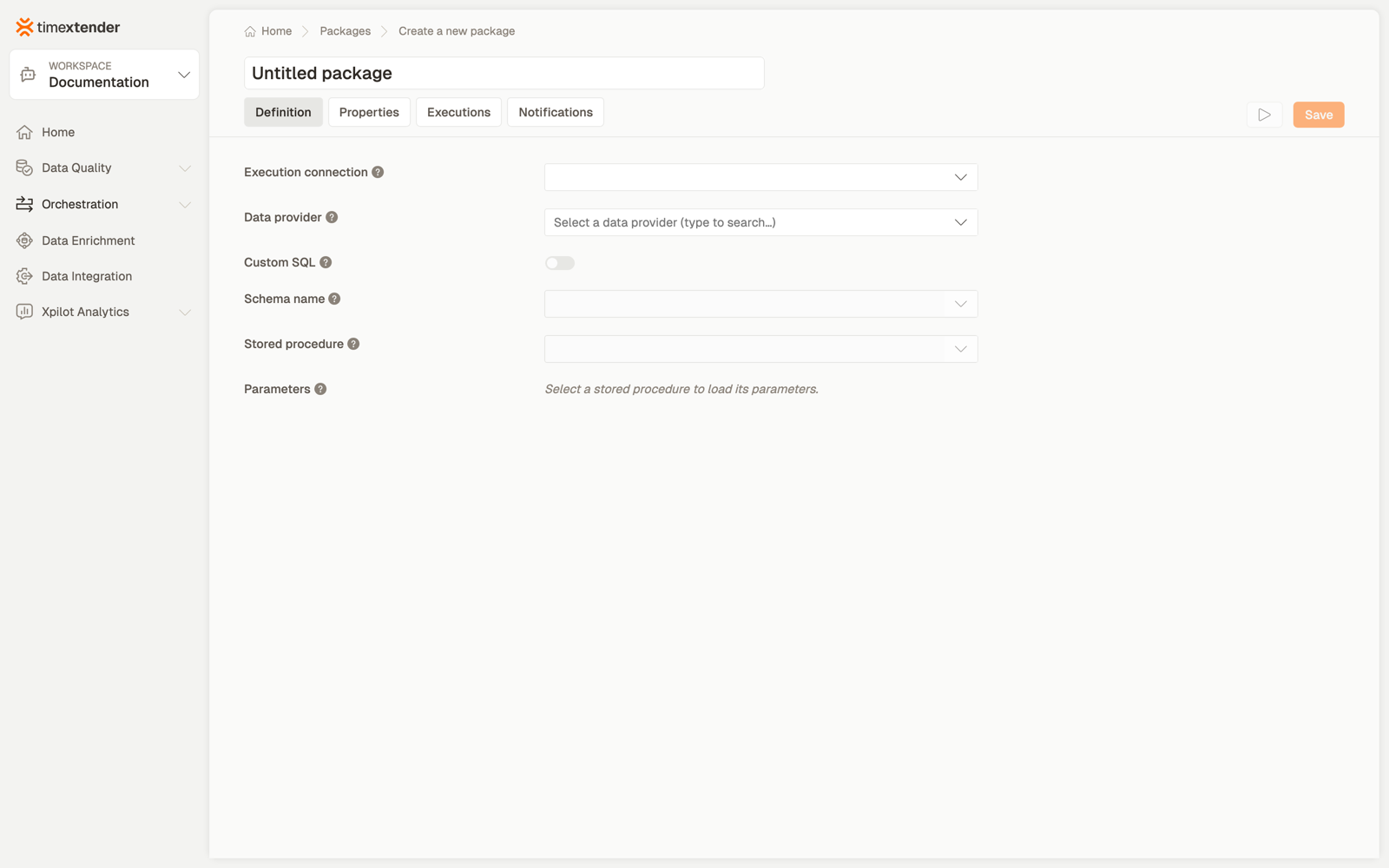
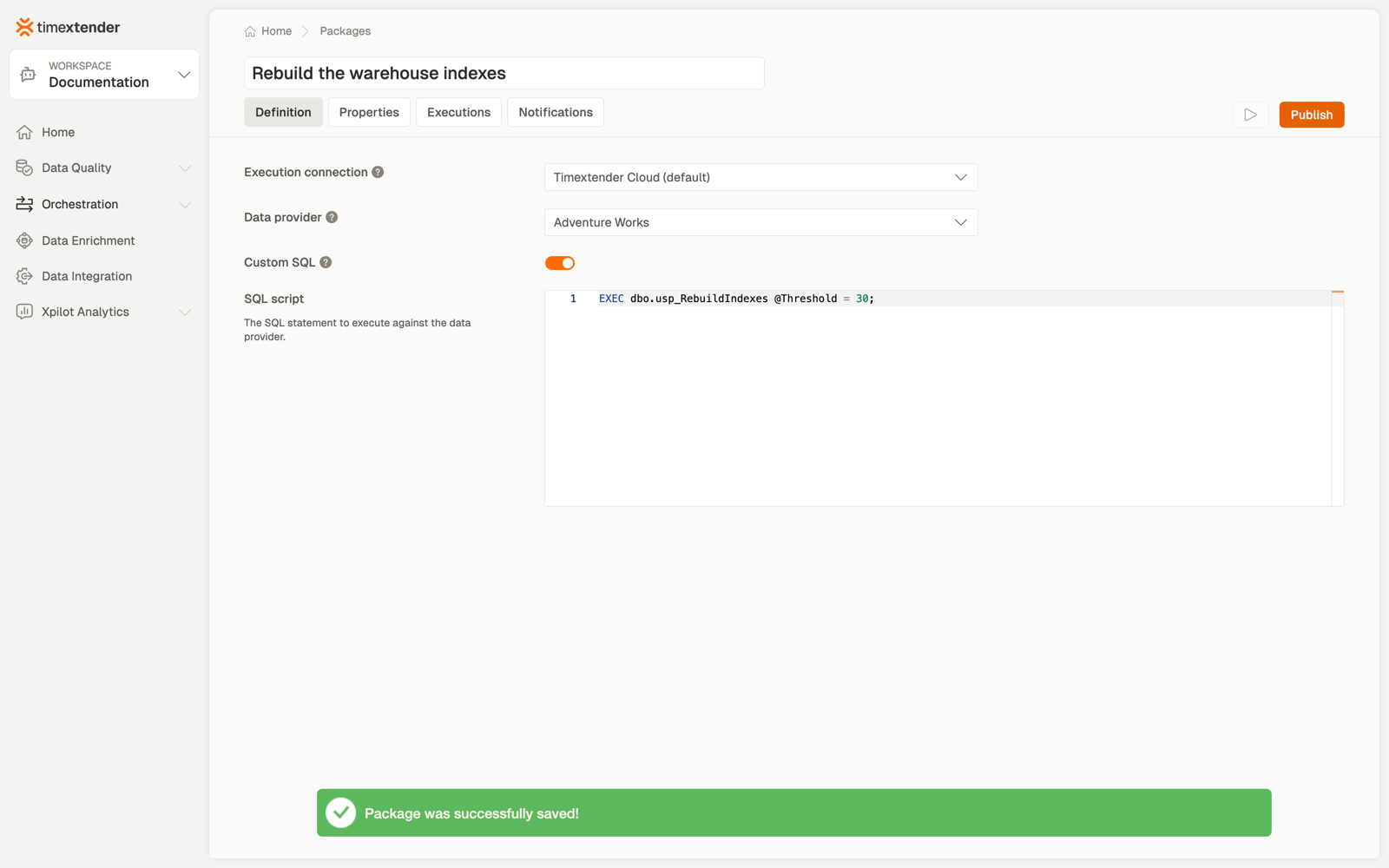
The data provider connection to execute the command against.
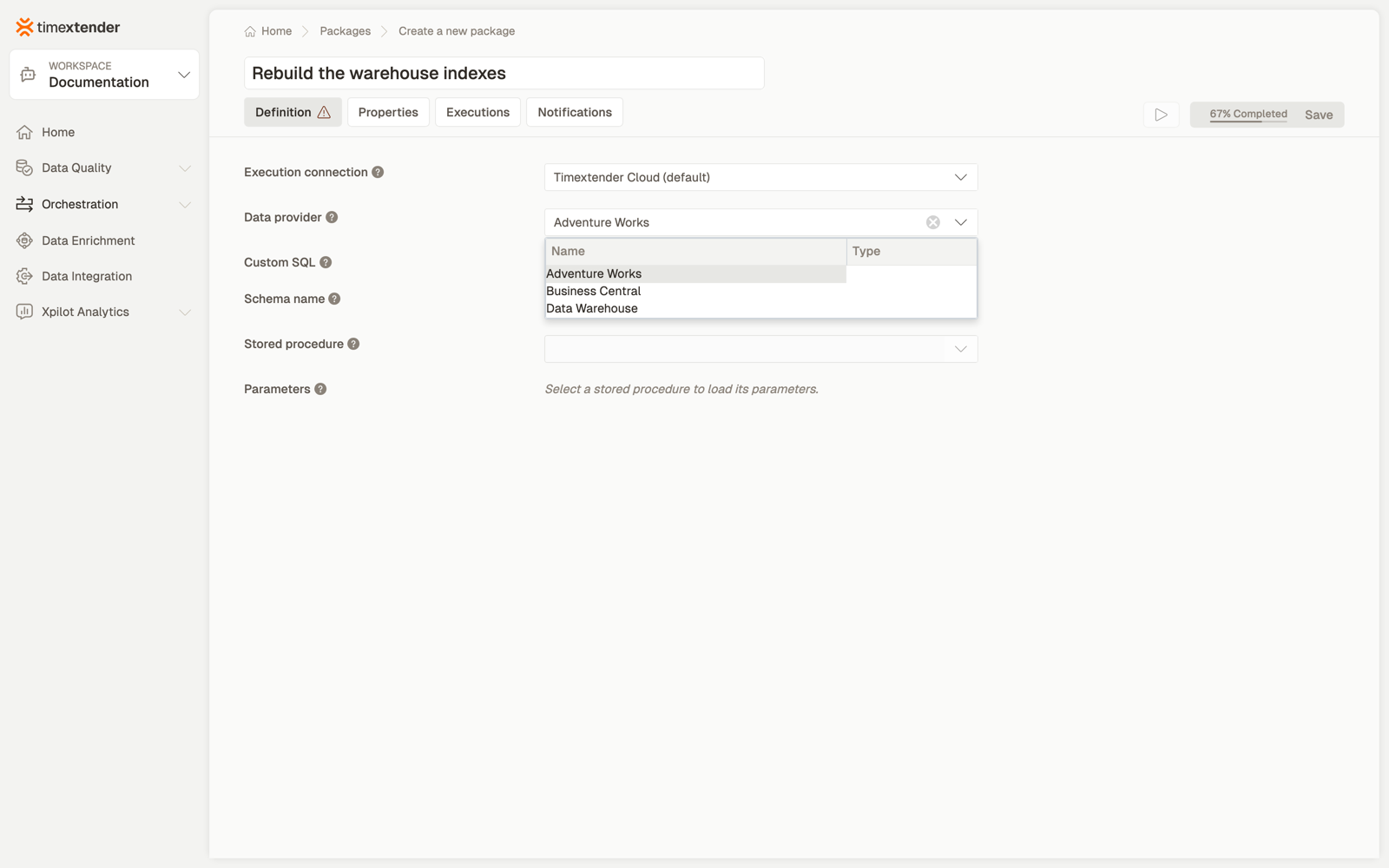
Name the package for the effect — "Rebuild the warehouse indexes" — not for the procedure.
3. Write the command
With the custom-SQL toggle on, the script field takes the statement to run.
The SQL statement to execute against the data provider.
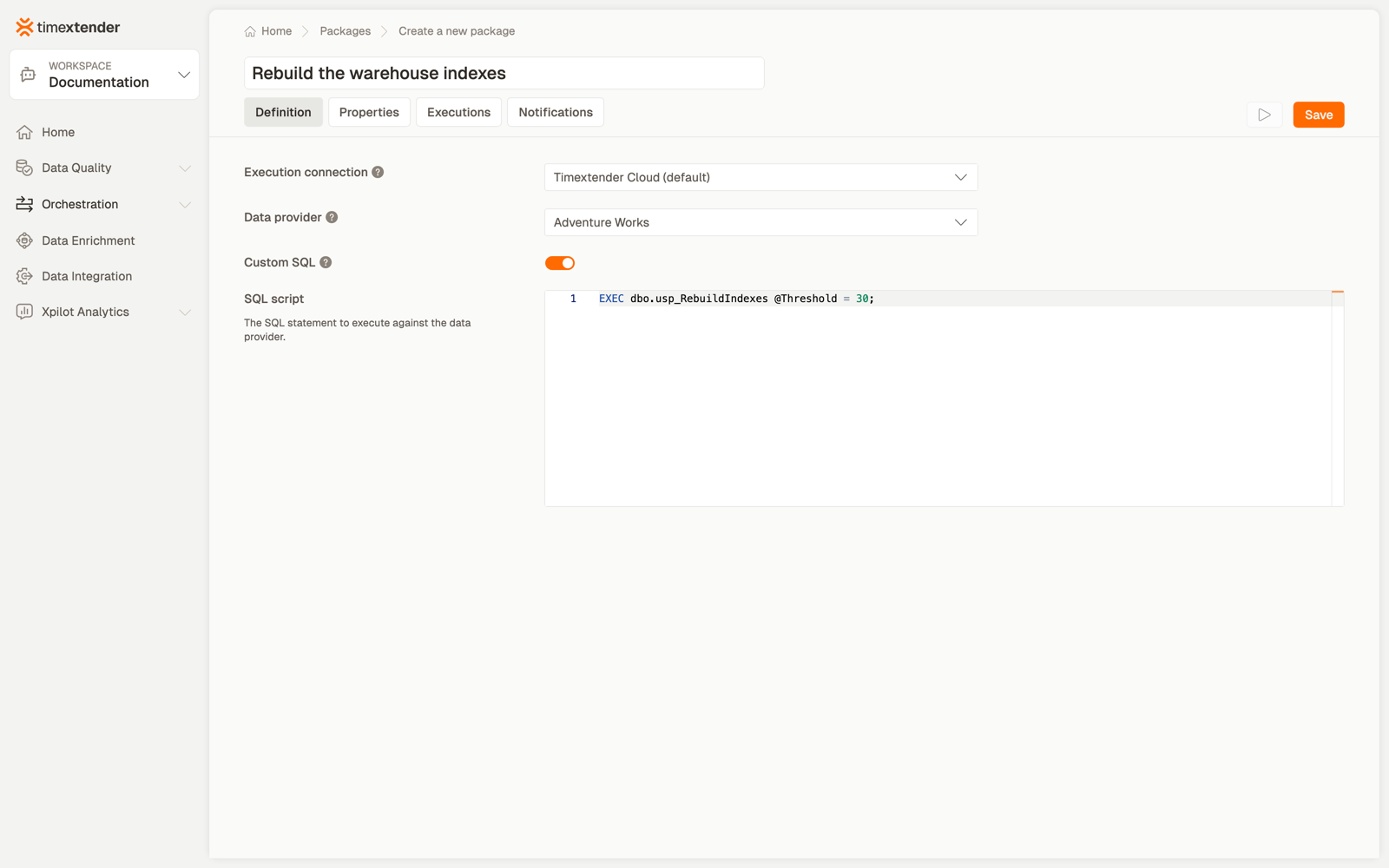
In stored-procedure mode instead, choose a schema and a procedure from the lists the editor reads off the connection, then fill in the values for the parameters it detects.
4. Save
Select Save.
Examples
Rebuild indexes after a load — custom SQL
Stamp a load as complete — custom SQL
Refresh an aggregate table — stored procedure
Schema dbo, procedure usp_RefreshSalesAggregate, with the parameters the editor detects —
typically a date or a batch id. Prefer this shape for anything with logic in it.
Best practices
Make the command idempotent. Orchestration retries. A command that fails halfway and cannot safely be re-run turns one bad night into a manual repair.
Do not put long transactions in a package. A statement that holds locks for twenty minutes will collide with whatever else the flow is doing. Batch it inside the procedure instead.
Use a connection with only the permissions the command needs. A package that rebuilds indexes does not need to be able to drop tables.
Keep parameter values in global parameters where they differ between environments, rather than editing the package per environment.
Say what it does in Properties → Description. EXEC usp_RebuildIndexes is not
self-explanatory to whoever is on call.
Troubleshooting
The schema or procedure list is empty in stored-procedure mode. The connection's credentials cannot read the database's metadata. Listing procedures needs catalog read permission, which a login scoped only to specific objects may lack.
Permission denied at run time, but the lists populated. Reading metadata and executing are different rights. Grant EXECUTE on the procedure, or the write permission the statement needs.
Save is unavailable. Hover Save. In custom-SQL mode it needs a statement; in stored-procedure mode it needs a schema and a procedure, and every parameter needs a name and a type.
A parameter value will not save. Parameter values are limited to 100 characters — "Value must be 100 characters or fewer." Move a long value into a global parameter, or into the procedure as a default.
Reference
Fields
| Field | Required | Notes |
|---|---|---|
| Execution connection | No | Use 'Timextender Cloud' for cloud-hosted execution |
| Data provider | Yes | The connection the command runs against |
| Custom-script toggle | — | Switches between stored procedure and custom SQL |
| SQL script | In custom mode | The statement to execute |
| Schema / Stored procedure | In procedure mode | Read from the connection |
| Parameters | If the procedure has them | Detected automatically; you supply values |
Validation messages: Please select an O&DQ Gateway, Please select a data provider, Please enter a SQL script, Please enter a schema name, Please enter a stored procedure, Every parameter needs a name and type, and Value must be 100 characters or fewer.
Versioning of parameters
Command parameters are stored per package version, so editing a published package does not retroactively change what earlier versions ran with.
Related
- Packages overview
- Create a Data Transfer package — for moving data rather than commanding a database
- Import/export table SQL script
Discussed in the community
Looking for related questions…
Didn't find your answer? Ask the community about this page — questions are answered by Timextender experts, partners and other users.